


The Birth of a Religion: Freemasonry’s Scottish Origins
The Family Of Love, The Art Of Memory, The Knights Templar, King James, Poetry and Human Sacrifice

(With humble gratitude I want thank my patrons for making this work possible)
As promised in in Part 1 of this essay, here in Part 2 evidence is forthcoming to show that Freemasonry originated in Scotland before coming to England, where it was formed by philosopher Francis Bacon into 3-degree “Blue Lodge” Freemasonry. If you want some background on Freemasonry Wikipedia is pretty good.
Short Argument For The Scottish Origin Of Freemasonry
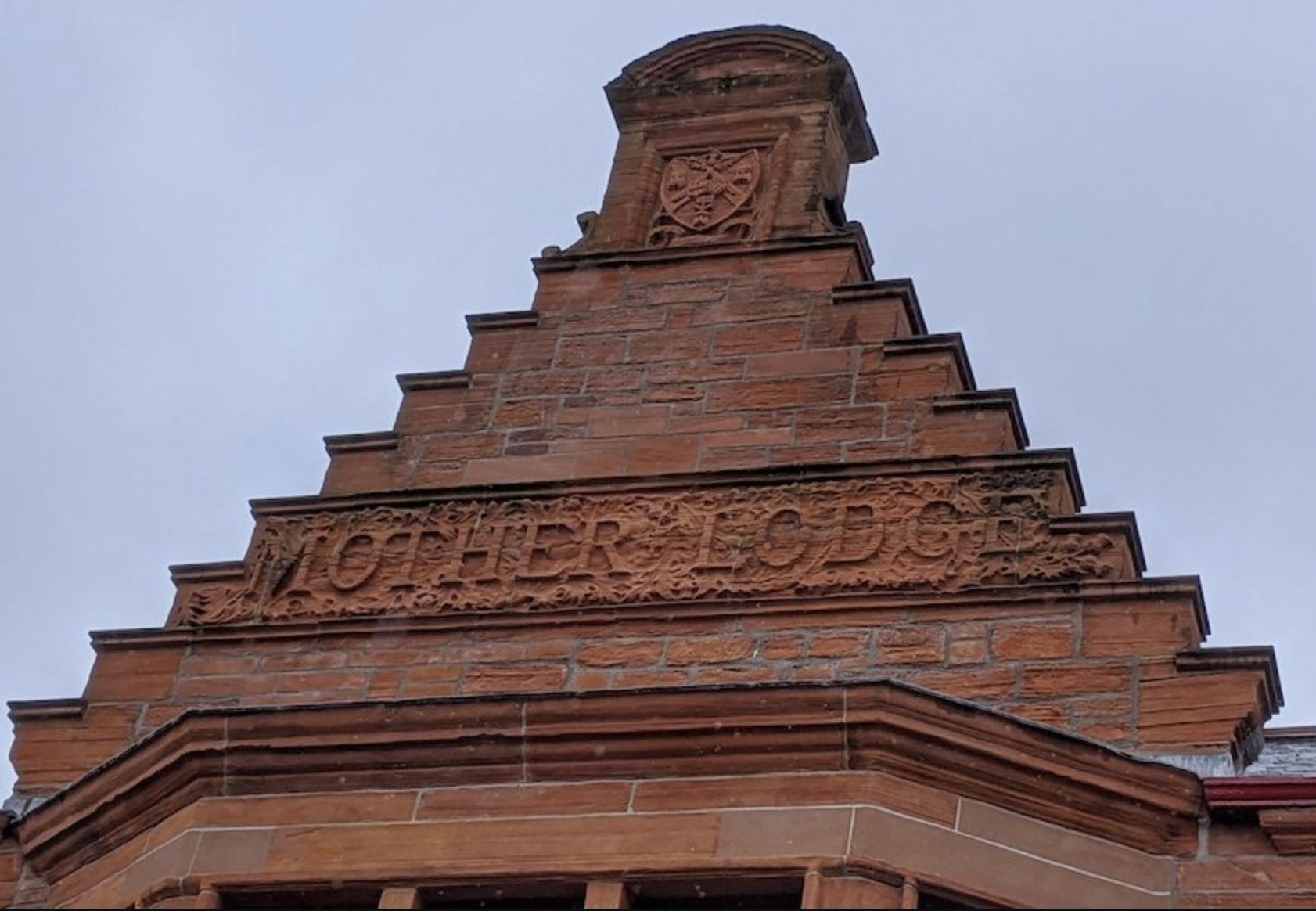
Freemasonry did not begin in ancient Egypt, Israel or in roving bands of Medieval stonemasons that built the cathedrals of Europe, all of which are common origin stories coming from Freemasons themselves and independent scholars. As for the Scottish origin, to wit: the two oldest lodges of Freemasonry are both in Scotland.(1) One is in Edinburgh, home of the old Scottish royalty, and the other oldest lodge is in the Orkney Island Highlands, where not much large scale stonemasonry was practiced dare I say, but where the Earl of Orkney clan lived. The Orkney Earl’s are the Sinclair or St. Clair family, with ancient connections to king Robert the Bruce and to the Knights Templar, and who later built the famous and mysterious Rosslyn Chapel. The Sinclair family gave us the first Grandmasters of Scottish Freemasonry to boot. The oldest known Masonic artifact, the Kirkwall Scroll, was found at the Orkney Island Kilwinning Lodge pictured above.
The first known initiate to Freemasonry (1601) is King James VI of Scotland (a real Scottish lodge record backs this up). This is the same James who later became King James I of England when Queen Elizabeth died. King James looms large over this history. The next recorded initiate (1640) is the Scots renaissance man Robert Moray: soldier, spy, scientist and a founding member of The Royal Society, the worlds first organization devoted to Science, whose formation was inspired by the writings of Sir Francis Bacon, Baron Verulam. Moray had lodgings in James’ Westminster palace on the Thames.
Now, if that’s not convincing enough you’ll have to read the next 25 pages of fascinating history. Surely THAT will convince you Freemasonry got it’s occulted origin in Scotland, near-about the great stone bridges of the Water of Leith river in Auld Reekie, the “Athens of The North”, Edinburgh. This is a long essay since much went into the making of the world’s most successful secret society, now a society with secrets. Jump about to the different headings as you see fit. Don’t miss the King James’ North Berwick Witch Trials section near the conclusion. James was a very nasty fellow and as such, the Masons got off to quite a dark start. No women allowed is one thing, but…I wouldn’t let that guy in my club, even if he was the king.
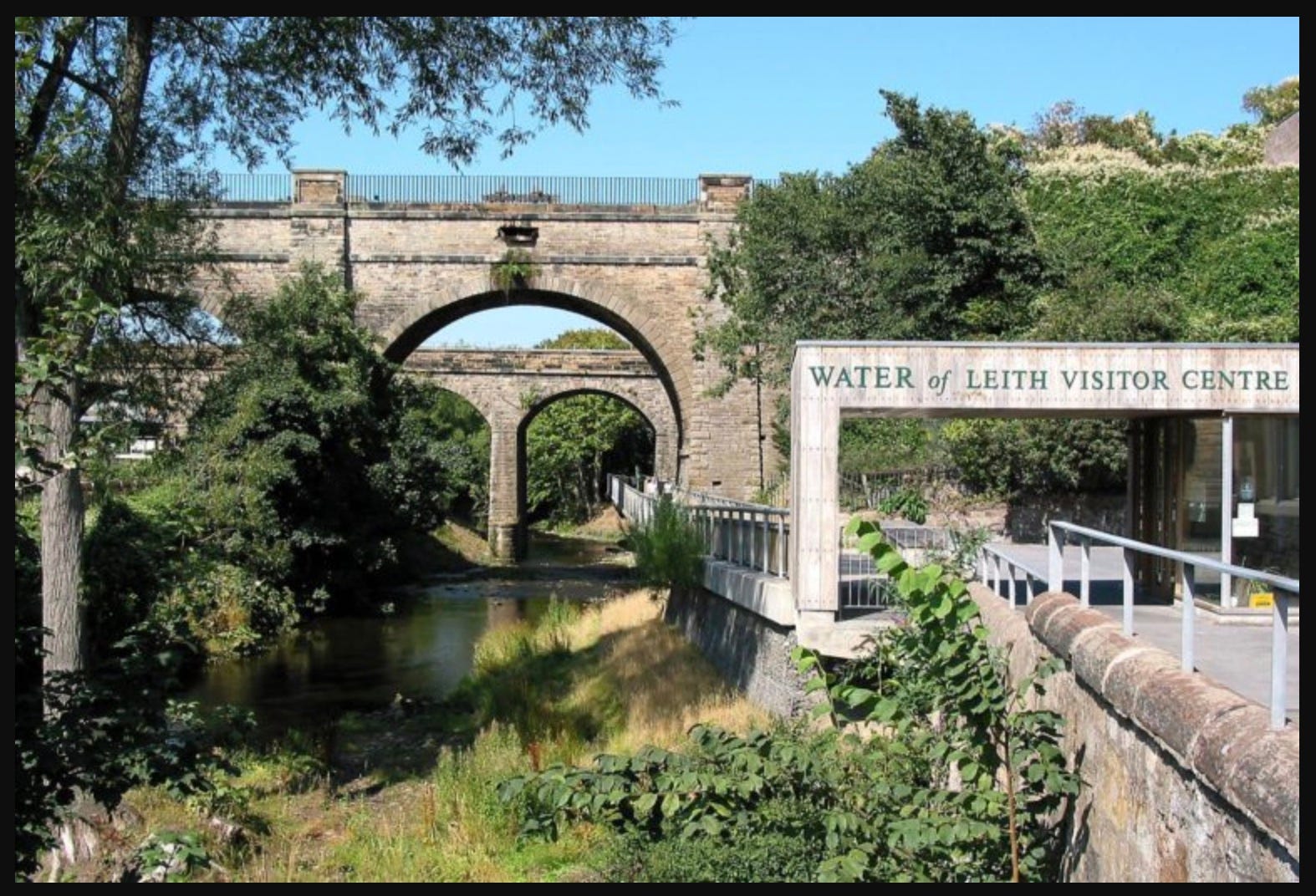
Edinburgh Bridges
This Scottish origin story shown by recent research,(2) is still mildly disputed by official statements from the United Grand Lodge of England (UGLE), the nerve center of all “regular” and “recognized” Freemasonic Lodges spread across the globe. UGLE maintains that the origins of Freemasonry are “Still to this day… the subject of intense speculation”. For an organization proudly based on the “values and principles of integrity”(3) as well as on “science”, this a curious falsehood. Because the origin of Freemasonry has been de-mystified.
In step by step fashion I propose to show that Sir Francis Bacon (1561-1626), Baron Verulam, Viscount St Alban, the philosopher, lawyer, historian, Lord Chancellor and William Shakespeare, to have been the force bringing Freemasonry from Scotland to London, structuring “the craft” into the form it took when it finally disclosed itself to the world a century later in London, already married to the beginnings of modern Science, oddly enough.
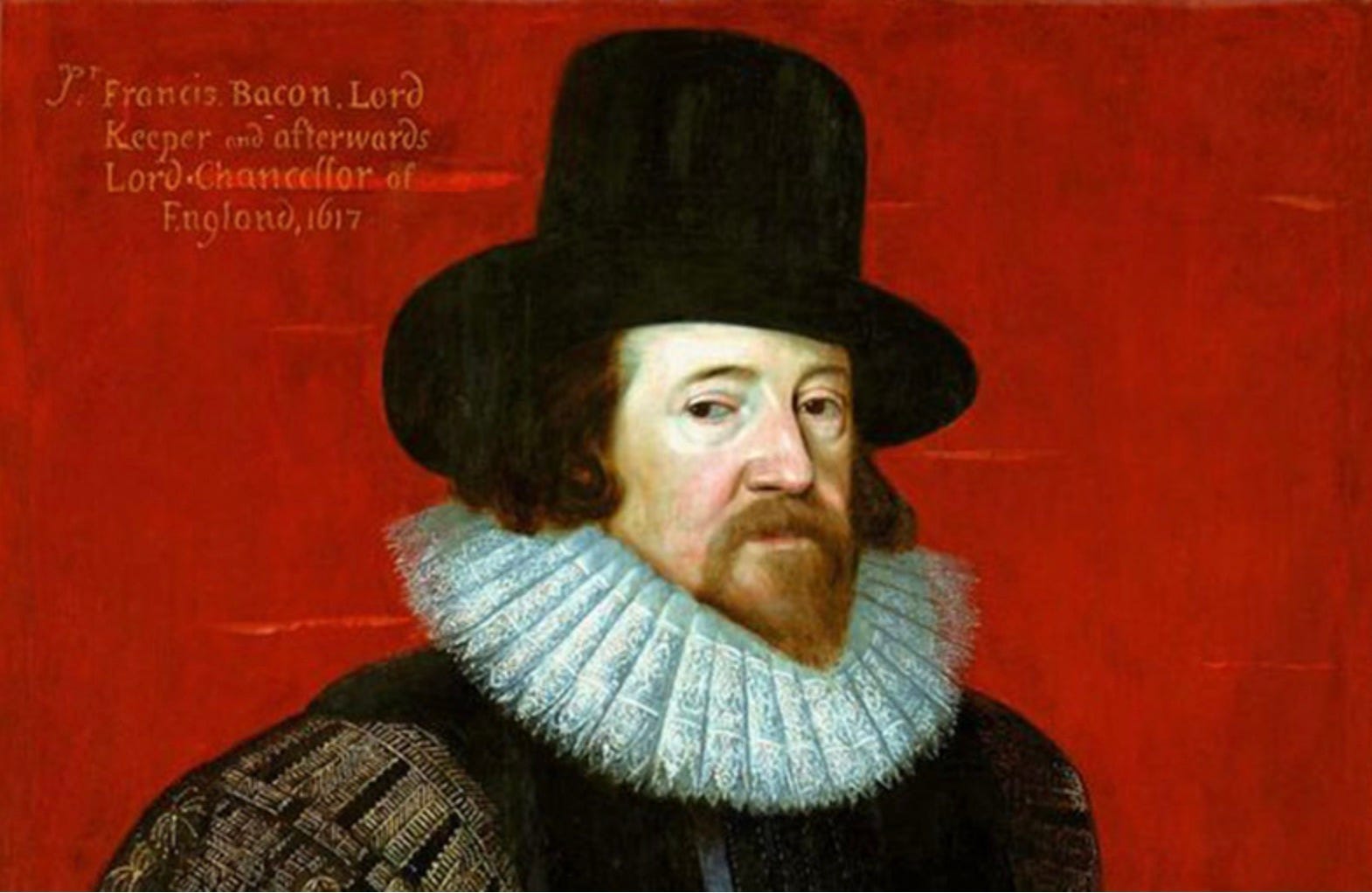
A bit of background on the many facets and accomplishment of Francis Bacon: (to get right to the Freemasonry scroll down to ‘The Origin Of Freemasonry” below) Sir Francis is well known today as the philosopher and “father of modern science” (4) and even as the “patron saint of the Enlightenment”, all the while being subject to persistent rumors, for decades and decades now, that he is the true author of the plays attributed to William Shakespeare.(5) Evidence for his involvement in writing the Shakespeare plays and creating the Shakespeare hoax has produced hundreds of books. (6) (Mark Twain, Freemason, wrote one in 1906) and probably best compiled by the Francis Bacon Society, founded in 1856 and still extant. For those new to this topic, follow the links for more, after hundreds of years of searching, there is still no credible physical evidence AT ALL that directly links actor, man about the theater and grain dealer William Shakespeare of Stratford-upon-Avon to the writing of the world famous plays and poems. None!(7) No letters from him or to him, no manuscripts, no payment records, no one in Stratford even knew he was a poet. It’s not even known if he ever went to school. To my satisfaction, after years of research, Bacon’s involvement in the writing of the plays is now an established fact.
Another remarkable truth newly understood is that there would be no British Empire without Shakespeare, that’s how important the plays are.(8) Empire is one of the primary reasons that Shakespeare exists. Bacon was all about Empire.
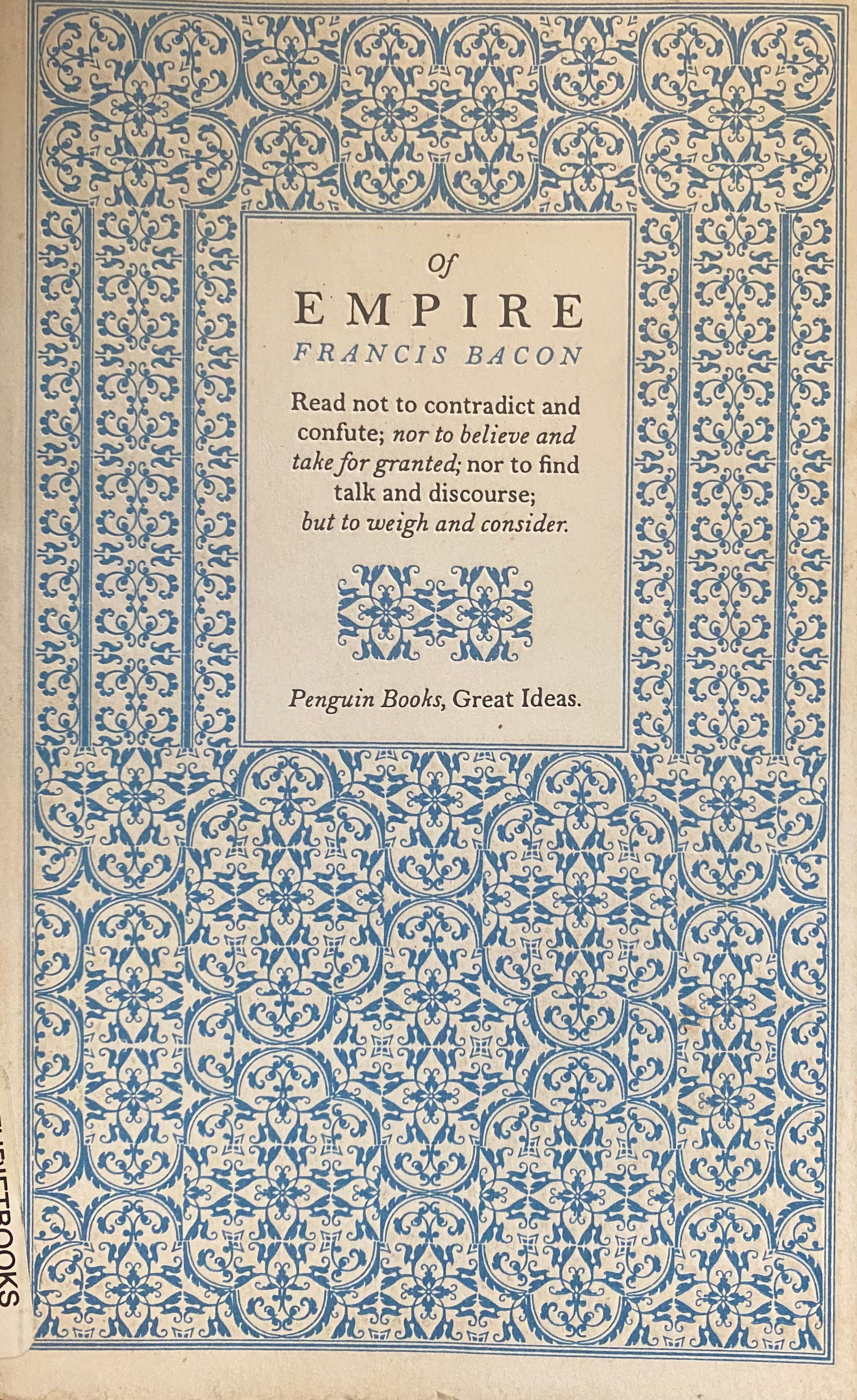
The Shakespeare “history plays”, especially “The Tragedy Of Richard III” are now understood by mainstream Shakespeare scholars to have been written as Tudor propaganda, and as such provide evidence for the point of view that the plays serve an ulterior motive.(9) Top-notch feature film '‘The Lost King” is must see on this issue.
My conclusion has become, after years of research, that Bacon surreptitiously created three interrelated ‘religions’ if you will, providing the engine of early Empire: Freemasonry is a literal secret religion still undercover as a ‘fraternal organization’, claiming to not be a religion. Science became a religion, that of Scientism: ‘Trust The Science’ has replaced ‘Trust In God. This was purposeful imho. And, tongue in cheek, (slightly) Shakespeare has also become a religion. Ask someone in academia. No CAP. Bacon was a part of and close to everyone in the original MI5, a master of espionage, and he hid the magnitude of his massive influence so as to better facilitate the flowering of Empire, based on his inordinate and precocious understanding of individual and group psychology. Rumor has it that he read “every book in print in England” before he left his teens.(10) Among those books, of course, were those by Machiavelli.(11)
Side note: Bacon is also considered to be one of the greatest lawyers in English history. Besides science, secret societies, the law, high/low-brow entertainment and espionage, Bacon loved plants, herbal medicine and gardening (well, his servants did the actual gardening). He also designed gardens and his thirteen year old wife’s wedding dress. Further evincing his great fondness for haberdashery he appeared, as described by his friend the famous playwright Ben Johnson, as being dressed head to toe in the royal purple at his famous 60th birthday bash, no doubt in a nod to his royal origins. But what Bacon was most fond of was the grand idea of an Elite British Empire. (12)
Scientism, out of all his accomplishments, is the key to Bacon’s world-encompassing end game. For confirmation, see this prophecy of the ‘priests of science as government’ in his famous book length fable New Atlantis.

To Hans Schantz PhD, scientist and AetherCzar at ‘Fields And Energy’ we owe the quip "Francis Bacon is not the father of science, he is the father of Scientism”.
For now let’s just say his new religion of Scientism led 5 billion people around the entire globe to roll up their sleeves and receive in their arms a barely tested ineffective experimental gene therapy for a disease they didn’t have, that was rarely deadly, BECAUSE SCIENCE. Bacon’s Empire is what the great scholar Frances (no relation) Yates called “British Scientific Imperialism”.13 “Knowledge itself, is Power” is the quote for which Bacon’s is most famous.
This Is The Story Of Our Lives
The Royal Society Of London, the first science-based organization in world history, began meeting officially just a few years after Bacon’s death. Oddly many Freemasons were in attendance at those earliest meetings of the Society that was to become hugely influential, eventually to change world history. The link between the two organizations was so close that some have speculated that The Royal Society created Freemasonry!14 I daresay the opposite is true. The Society indeed credits Baron Verulam ShakesBacon as being the inspiration for their founding, going even so far as to compare Bacon to Moses in the first written history of the Society published in 1667.15 The frontispiece of that history is shown below, now permanently on display in London’s Museum Of Science.
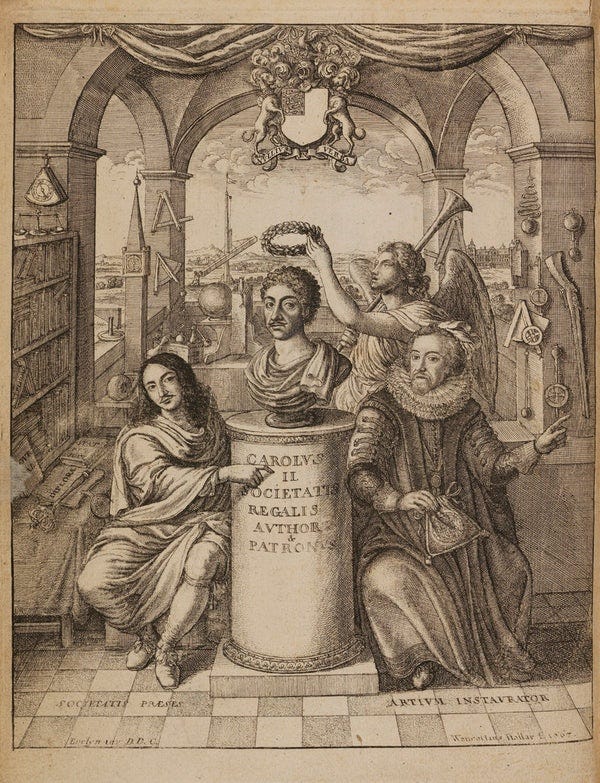
“Frontispiece 👆to Thomas Sprat’s 1667 A History of the Royal Society, showing the crowning of King Charles II. Sir Francis Bacon is shown on the right; William Brouncker, 2nd Viscount Brouncker, the first president of the Society, is on the left.” Dig all the Masonic symbolism ya’ll.
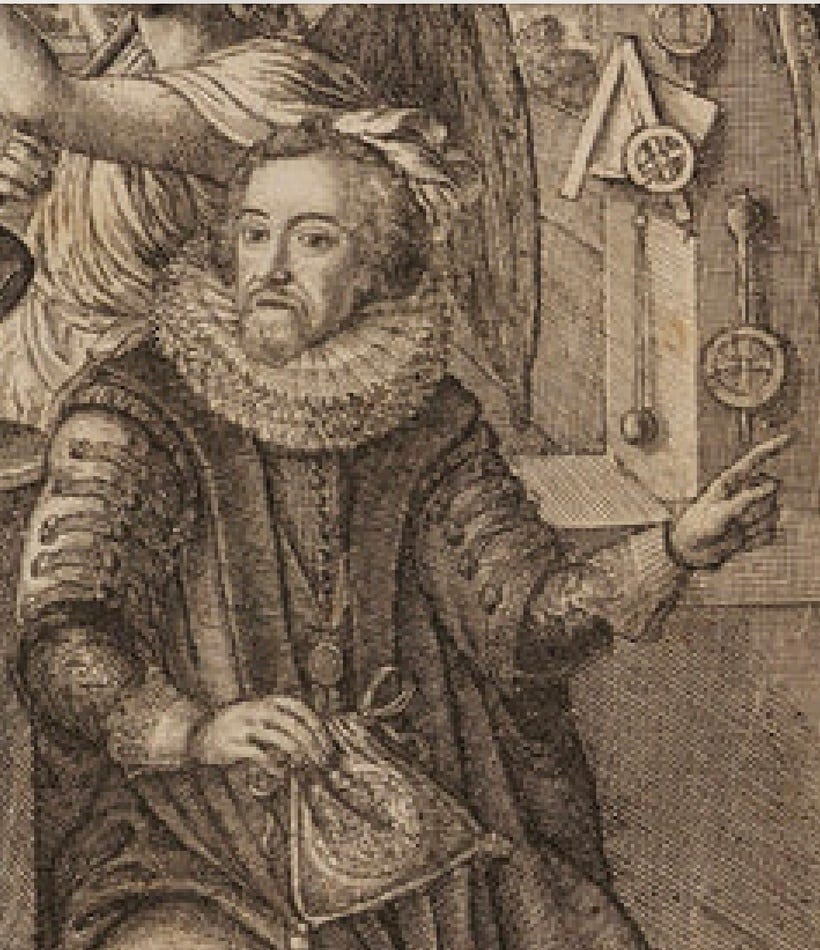
Bacon is actually pointing to the splayed cross of the Knights Templars 👆 here. The famous Freemasonic black and white checkerboard floor you see in this drawing is of Templar origin.
At the center of the twelve men in attendance at the very first meeting of The Royal Society were known Freemason, spy and scientist Robert Moray, as well as Christopher Wren who was to become a world famous architect. At the second meeting of The Royal society was the third earliest known initiate into Freemasonry: Elias Ashmole. Also in attendance was an expert in finance, government officials and even representatives of The Church Of England. Thomas Spratt, the author of that early chronicle of the Society was a canon of Westminster Abbey.
The Origins Of Freemasonry
As expertly detailed in Jessica L. Harland-Jacobs 2012 Builders Of Empire: Freemasons and British Imperialism 1717-1927, Freemasonry is revealed to be synonymous with Globalism in its earliest incarnation.
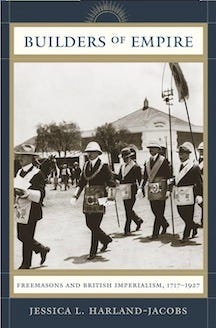
The origins of such an intensely powerful globalist force as is Freemasonry should be better known, should it not? If Francis Bacon did indeed create modern Freemasonry, that would be knowledge of some importance, would it not?
A Scotsman once declared “extraordinary claims require extraordinary evidence”. In light of such, the rest of this essay contains some of that extraordinary evidence for Freemasonry’s Scottish origins.
The Scottish Play
The very earliest line of descent for Freemasonry lies in what are called the “old charges” or “old constitutions”, which contained a mythical history of the craft and trade building with stone. These “old charges” date to the medieval era.18 Medieval trades were administered by a guild specific to trades such as weaving, leather working, carpentry, wheel wrights etc. These were associations that offered aid, protection, order and regulation and gave political power to craftsmen and tradesmen. To practice a trade professionally one had to join the guild.
“Guilds in medieval and early modern Europe offered an effective institutional mechanism whereby two powerful groups, guild members and political elites, could collaborate in capturing a larger slice of the economic pie and redistributing it to themselves at the expense of the rest of the economy. Guilds provided an organizational mechanism for groups of businessmen to negotiate with political elites for exclusive legal privileges…” 19
Each guild had a written “mythical history” that stressed the antiquity of their craft, closely linking them with religion and moral concepts”.20 the good old days. The stonemasons happened to have a particularly elaborate mythical trade history. Their “old charges” not only emphasized morality, but as well tied masonry to geometry, and gave importance to both Solomon’s Temple and ancient Egypt in the development of the craft. One legend even has the guild dating back to the building of Solomon’s Temple. However, “Nothing…made the mason guild unusual, there was no indication to single out the mason craft from the rest for a remarkable and unique future.”21
This medieval contribution clearly provides ingredients for modern Freemasonry. The tools and materials of building in stone being a prominent part of Freemasonry’s esoteric symbolism.
The Renaissance Occult and Medieval Scotland: The Schaw Statutes
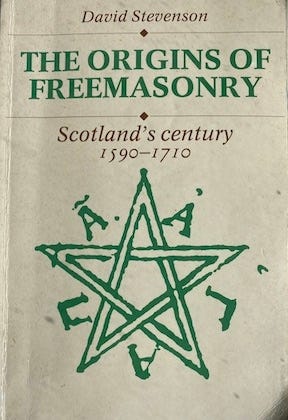
Guilds of laboring men began morphing into esoteric Freemasonry when aspects of Renaissance “spiritual” thought were added onto the medieval legends of the “old charges”. This splicing of the Renaissance occult onto the guilds is first documented in 1598, when, in Scotland, the new “Schaw Statutes” were pronounced as official Scottish government decrees. These new statutes included Hermetic notions of the quest for knowledge, a greater glorification of mathematics and the architect. It is in Scotland specifically where the Hermetic and the Occult were combined with building trade symbolism so fulsomely found in Freemasonry. Right there is really where Freemasonry can trace it’s origin, largely due to heroic work by historian Douglas Stevenson’s The Origins Of Freemasonry: Scotland’s Century 1590-1710. 22
Oddly enough, there are no statutes for any medieval mason’s guilds in England. They are well documented in Scotland and Europe. This is because the guilds had been banned in England after the famous Peasant’s Revolt of 1381 (a revolt which has been linked to the Knights Templars in the great Born In Blood)
“After the Peasants Revolt in 1381 Richard II - one of England’s worst kings in the face of stiff competition - passed an ordinance that all Gild warrants were to be laid before him. In 1425 all annual assemblies of gilds were banned by Henry VI. The “persecution” of the guilds continued intermittently for almost the remainder of the mediaeval period. It is against this background that many of the churches mentioned on this website were being built or, much more frequently, being extended and updated. Knoop and Jones were unable to discover a single example of guild regulations preserved in England.” 23
The all important Shaw Statutes in Scotland changed the notion of what a masons lodge is, going from a temporary building set up on a work site to store tools and have lunch - to more conceptual “lodges’ that were given regulatory control over all the masons working in an area, typically extending to an entire Shire. The lodge, distinct from a guild, described lodge roles in terms that are still found in today in Freemasonry such as ‘warden' and ‘entered apprentice’.
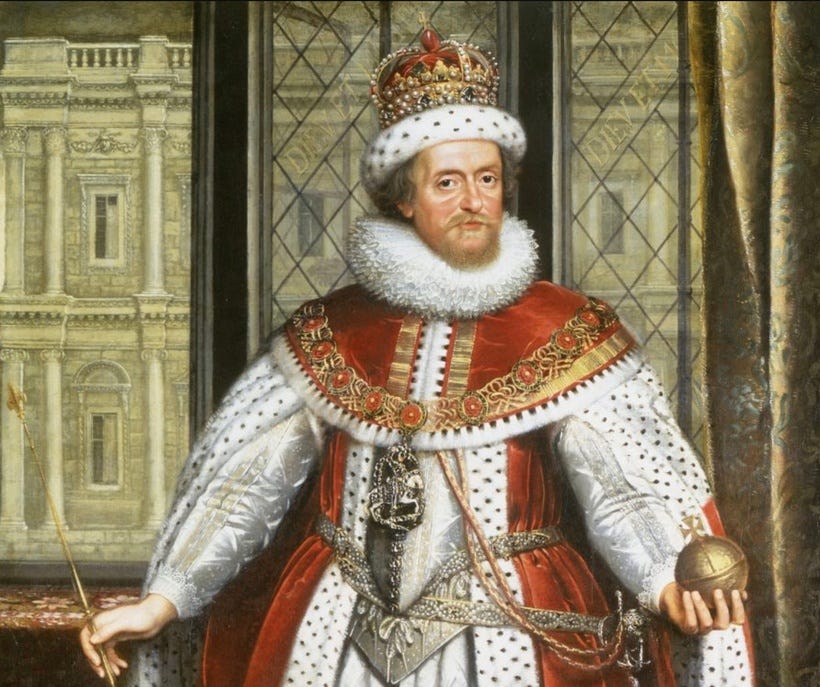
King James I With A Sceptre and A Globe With A Templar Cross. Gee I wonder What That Signifies?
King James I and VI
King James VI of Scotland had named William Shaw “master of work” for every building project in all of Scotland. Schaw then issued the occult-themed “Schaw Statutes”. King James VI of Scotland was soon to become King James I of England.
Enter Stage Left: Giordano Bruno
The Schaw statutes state that the Kilwinning Lodge (of the Orkney Islands mentioned above) was ordered to test every entered apprentice on “the art of memory”. Dating to ancient Greece the art of memory originally trained orators in more effective rhetorical skills by increasing the ability to remember long speeches using techniques of imagination, usually involving buildings. In the Renaissance the ‘art of memory’ had taken on occult overtones, linked with the imaginative meditation exercises of Kaballah via Bruno, John Dee, Cornelius Agrippa and others.
The ancient Art Of Memory had now became “spiritual”. Giordano Bruno is one of the most interesting, influential and learned people of the entire Renaissance and he was heavily involved, as many were, in the occult practice of Kabbalah (or Cabala for Christians) as well as promulgating the ‘art of memory’. Kaballah and the ‘art of memory’ seem to have fused with Bruno. Bruno was a huge influence on Bacon as we will see in Part 4. Kaballah used similar imaginative exercises as did ‘art of memory’ yet the purpose of the meditations of Kabbalah was to reach supposed higher realms of awareness, not memory training.
Christian Cabala was quite openly all the rage at this very time throughout Europe, including Scotland. Necromancer, mathematician and spy John Dee’s influence was at it’s peak in England and the occult Rosicrucian “invisible college” furor was just a few years away. Kabbalah was to become a core part of Freemasonry.
Bruno, an Italian Dominican priest, spent two and a half years in England, publishing eight book that were influential on men of letters and science. He was very friendly with people known to be in Bacon’s inner circle: influential aristocrat, soldier and poet Philip Sydney and the statesman and poet Fulke Greville. Poetry was of supreme importance in this era. It is impossible that he did not meet many times with Francis Bacon. However no records remain of such meetings. 24
Bruno also worked as a spy. He worked directly under Francis (no relation) Walsingham. 25 Walsingham was England’s original and renowned spymaster, revered today as an acknowledged genius of espionage. Walsingham had earlier employed fifteen year old Bacon as a spy and diplomatic attaché to France in 1576. With Bruno we get the documented confluence of the ingredients later to be seen in the 18th - 20th century self-described “charitable and fraternal organization” of Freemasonry: Espionage, military, religion, the occult, science and government fused with the symbolism of the stone building trade, joined together with an intense blood oath of absolute secrecy. Got Empire?
Enter Stage Right: The Sinclair Clan
William Sinclair of Roslin26, pg 54XXX became the next (but only partial) overseer of all of Scottish masonry, issuing the St Clair Charter of 1601, this authrtu given ot him by King James VI. There seems to have been a wee power struggle at this point as the Sinclair’s of Roslin were given some jurisdiction of the mason’s trade even before Schaw’s death in 1602. The St Clair Charter was decreed in 1601. Here the waters get a bit murky and we get two distinct aspects of Scottish Masonry. One still connected to the Schaw statutes and one to the St Clair Charter. Brother King James VI decamped to London to become King James I, and purposefully left the situation in a bit of a perfect muddle back in the homeland.
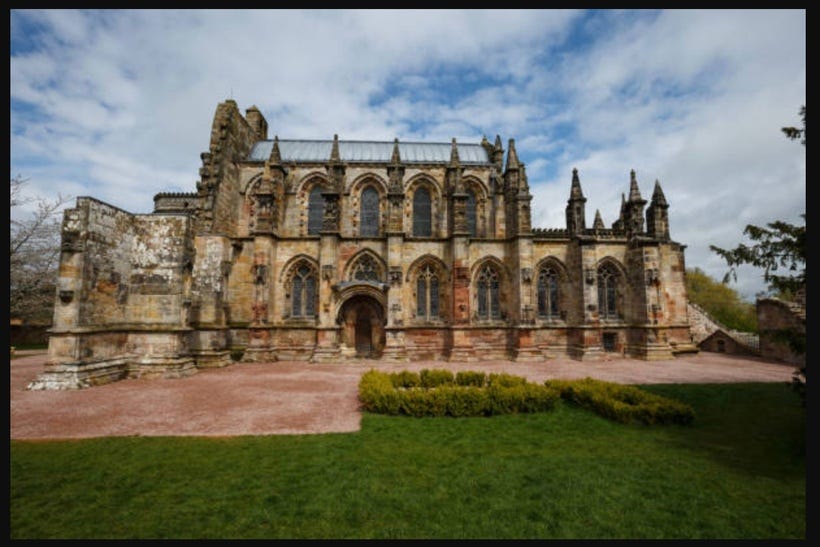
Roslynn Chapel
With the St Clair Charter we get a connection to the Crusades and the Knights Templars. Sinclair was a direct descendant of the builder of the now famous Rosslyn Chapel, as well as a direct descendant of William “the Crusader” Sinclair of Roslin, Lord of Roslin. Here we have linked the Scottish government, the Crusades (possibly Knights Templar) and early Freemasonry.27 Both clans, St. Clair and Stewart have connections to the Scottish monarchy. The Stewarts, through marriage, descended from Robert the Bruce, while the St Clairs fought alongside him and received lands as a reward. Both clans participated in the Crusades of course. Possible Sunday brunches after Church together let the kiddies have a run about? No documentation of such exists but one does wonder.
Dreck like Holy Blood, Holy Grail and The Da Vinci Code have made a minefield of Knight Templar history, which will be broken out in Part 3.
In 1736 after Freemasonry had come above ground in 1717 in London, it was William St. Clair’s descendant, William St. Clair, (there’s been a LOT of William St Clairs) who was made first Grand Master of Scottish Freemasonry.
Scotsmen King James VI and Sir Robert Moray: First known Initiates Into Freemasonry
King James, who became known as “Scotland’s Solomon” is listed as having been initiated on 24 December 1601 at Freemason’s Lodge Scoon and Perth No. 3 in Perth, Scotland. Interesting date! Scoon and Perth is a sister lodge to what is considered Scotland’s oldest or second oldest lodge in Kilwinning, Orkney Islands. This initiation record is considered authentic but it is post dated back from 1658. 28
The first documented evidence of someone being initiated into Freemasonry took place in 1640 when a Scotsman named Robert Moray, a future founding member of the Royal Society, professional spy, scientist and statesman was initiated in England but into a Scottish lodge- the Lodge of Edinburgh.29 XXX Well, who initiated him? And why was Moray at the first meeting of the Royal Society twenty years later? Sir Robert Moray was a descendant of an ancient and noble Highland family.30
1602 is the same time period Francis Bacon was involved int the Shakespeare hoax, still with no official government or legal position. His activity in Parliament occupied a couple weeks a year. Queen Elizabeth was still on the throne.
At some point before Moray’s initiation, my guess is exactly when King James was initiated, just after the St Clair Charter was issued, a split was made between the officially sanctioned Scottish working-mason’s Guilds with their Schaw statutes, and the secret Freemason lodges, that used the symbolism of a workingman’s tools and materials but with a new feature: initiations involving esoteric symbolism. This is why there is a confusing the split between the St Clair Charter and the Schaw Statutes. “Charter” is the term still used today for official recognition given by a Grand Lodge to an individual lodge to be “recognized” to practice Freemasonry.
The first type of lodge had real builders and are today called “operative lodges”. The second type of lodge did/does no building, meets in secrecy and performs elaborate theatrical and imaginative initiations. They are known as “speculative Masons” composed originally of upper class merchants, landowners, nobles and even Royalty such as King James. Spot the difference? Later Freemasonry did open up to the working classes to great success.
Scotsman and first known initiate to Freemasonry Robert Moray is a key player in our saga, and provides documented links to intelligence, science and government for both Freemasonry and The Royal Society.31 Claims the Moray family were Knights Templars is backed up by Wikipedia 32, 33. Moray was actually living in King James Whitehall palace much of this time!
Though the Freemason’s were secret, and their presence in this time period is difficult to trace, the government was well aware of them, which I contend is what the St Clair Charter is partially about, official sanction. Just as the English government were fully aware of the Royal Society, recognized by King Charles II after the civil war and Restoration.
Old London was a small town. Everyone knew everyone’s business and you would not dare start a secret society without approval from the very top, or suffer dire consequences. Francis Bacon’s special relationship to the very top, the very crown itself will be detailed in Part 4.
The suggestion that nobles and aristocrats slowly began to join working ‘operative lodges’ filled with working stonemasons until they overwhelmed the workers and this became ‘speculative’ lodges is thoroughly laughable. By 1717 Freemason’s ‘lodges’ were still entirely made of upper class merchants, government officials, clergymen, aristocrats and even nobility. By 1737 the Prince Of Wales, son of King George II was a certified Freemason. There were exactly zero stone carvers in Freemason lodges and these lodges never functioned as guilds, while the operative lodges of builders contained no aristocrats.
Freemasonry Is A New Religion
What was happening is that the birth of a new religion, one meant to be tolerant of all religions, a hallmark today of Freemasonry and similar to Gnosticism. While the government was well aware of this new religion, commoners and others loyal to Church of England or Church of Rome were certainly not. Unlike today when any yahoo of the soap bubble can become priest of his own tax-free Mystery Of The Slippery Slope, a new religion back in the day got you tossed into the dungeon or worse, as we shall soon see when we get to The Family Of Love.
To be fair, UGLE and other Freemasons have always denied that Freemasonry is a religion. Many would beg to differ.34
Into The Fruitful Weeds With Marsha Keith Schuchard

An enormous amount of well sourced information on Freemasonry’s Scottish (and Templar) roots has been collected in Marsha Keith Schuchard’s remarkable Restoring the Temple of Vision, Cabalistic Freemasonry and Stuart Culture (2002) 862 pages, Brill Publishing. Schuchard’s specialty, for which she received a Ph.D. in British literature, is the esoteric-erotic underground traditions of 17- 20th century secret societies and their influence on British and Irish poets and artists. In order to fully understand these later eras of Freemasonic activity, Schuchard felt she needed an understanding of Freemasonry’s origins. She seems to have left no stone unturned, beginning her quest as far back as Roger Bacon in the 1290’s where she finds abundant interesting links of early scientist Roger Bacon to Kaballah and Judaism.
Restoring The Temple takes an entirely neutral stance if not a subtly favorable stance on Freemasonry. Schuchard has written a staggering amount of essays and two books, later spending a lot of effort on William Blake, Swedenborg and Jonathan Swift.
What Schuchard documents is an astonishing array of occult-saturated statesmen, courtiers, poets, scientists and even alt-religious figures connected to Family Of Love, all in King James VI immediate circle, all having links to Cabala and/or some of the various ideals of the future Freemasonry. King James himself was very interested in Cabala and other forms of the esoteric as were so many of the educated classes at that time. Even as a young man James classmates at school, like prodigy James Crichton and George Erskine were “early illuminists”35
James was to become known as “Scotland’s Solomon”.
Stamping Out Witchcraft In Scotland
As a side note, curiously (or not) the ruling class seemed to expend quite a bit of effort stamping out the occult in the uneducated of the day. King James even wrote a book called Demonologie urging a crackdown on witchcraft, resulting in the the North Berwick witch trials which took place in 1590-1591, marked by extreme brutality and resulting in the execution of around 70 people, mostly women (naturally) who were accused of witchcraft. The accused were subjected to medieval torture methods, including the breast ripper and the Scold’s Bridle, to extract confessions. Many died from their injuries, others were burned at the stake. The North Berwick Witch Trials revealed a dark, cruel side to James’ nature, and yet this was a highly intelligent King, an intellectual.36
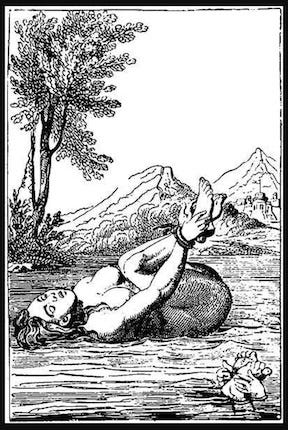
The Poet: Guillaume de Salluste Du Bartas
Guillaume de Salluste Du Bartas, was a highly influential French poet/coutier who made a lengthy visit to Scotland after an invitation from James. James even translated Du Bartas most famous poem “Semaines” into Scots English. “Almost every theme of Jewish, Hermetic, and neo-platonic mysticism that emerges in seventheenth century Freemasonry was powerfully articulated in the Semaines. Du Bartas repeatedly described God as the “architect Devine” and the “a heavens architect”. 37 DuBartas argues that God created man in his own “architectural image”. Got Freemasonry much?
Du Bartas served in the court of Henry of Navarre who later became King Henry IV of France in 1589. Well wouldn’t ya know but Francis Bacon lived in the court of Henry of Navarre when he was sent to France at the age of 15 by Walsingham, as previously mentioned, as a diplomat attaché spy. Du Bartas was in Navarre simultaneous with Bacon. Du Bartas ideas and poetry seem to have had quite an effect, as they did on on many, on young Bacon, as future new religion of Freemasonry, and the similarities to Du Bartas poetry are beyond coincidence. Just sayin’. More in part 4.
The Family of Love
Another proto-Masonic group with links to James VI was The Family Of Love, an international secret society and religious sect seeking to reconcile extremes of Protestantism and Catholicism.38 The ‘Familists’ practiced a Nicodemite strategy in which members conformed publicly to the religion of their resident country while privately maintaining their non sectarian spiritualist beliefs. Shades of The Freemasons, The Templars, The Assassins, The Marranos, The Sebbatians, The Frankists, the Moravians. Good golly! “The Family” had secret meetings, passwords, rituals and a code of ethics.39
Many of the similarities between The Family of Love and the later emergence of Freemasonry are also beyond coincidence.
Based in Holland and Atwerp and founded by Dutchman Hendrik Niklaes, the group’s printing house house was run by Christopher Plantin who published the renowned Plantin Polyglot Bible in 1573, the Frontispiece of which is is remarkably Freemasonic.
There were contacts to Scottish monarchs and courtiers from Plantin’s printing house which was called “The Golden Compasses”. I probably don’t need to tell anyone reading this that ‘the compass' is one of the most important symbols of Freemasonry. And by the way, the word compass appears over and over again in Shakespeare. Just sayin’. Francis Bacon would have been 12 years old when the polyglot Bible was published. His family as leading intellectuals and educators of England no doubt owned one. It was written in 5 languages, including Hebrew, Latin and Greek, even Syriac! .
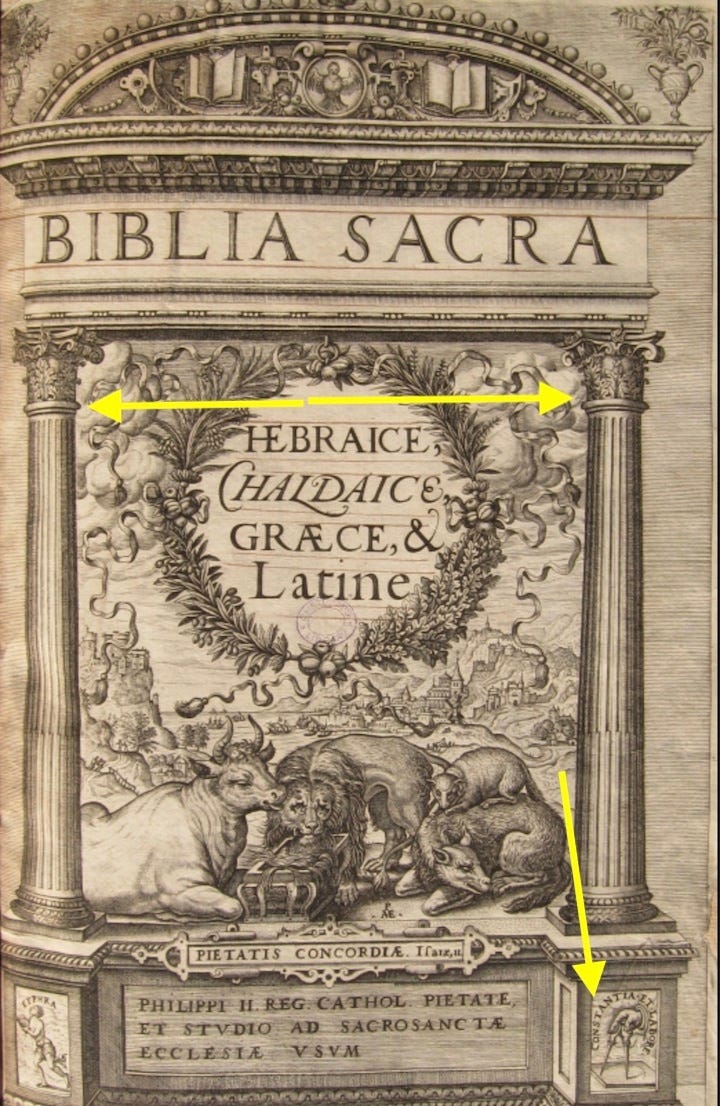
Plantin Press Polyglot Bible with Masonic Compass and Columns
Hendrik Niklaes message is said to have appealed to the well educated and creative elite, artists, musicians and scholars.
The ‘Familists’ emerged in England perhaps more than almost anywhere else because the repression in Holland was severe. They faced serious difficulties in England as well, and became well known, reviled by the Puritans and the Church of England alike for their hermetic beliefs. Secrecy became very important. There’s that word.
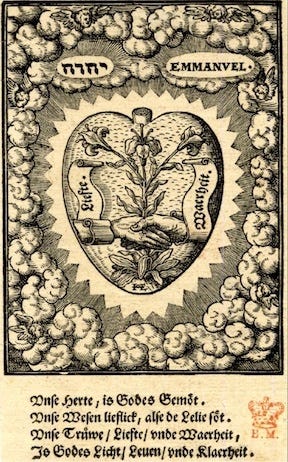
Family Of Love Emblem: Handshake Is a Key Masonic Symbol
The Familists belief that humans were perfectible made them hermetists if not Gnostic. They secretly disavowed the Church Of England and their beliefs spread via the books of the Golden Compasses printing house.
In 1580 Queen Elizabeth ordered “Prosecution of the Family of Love” by royal edict. If any of their books were found the owner was to be thrown in jail and “bodily punished”.
This sort of persecution did not happen in Scotland. During this time period there were many contacts between Anthony Bacon (Francis younger brother and of high rank in English Intelligence ) and high ranking Scottish courtier diplomats and even with James VI himself. “According to the Scottish diplomat and intriguer Archibald Douglas, James VI gave Bacon a valuable ring”.40
Bacon as usual tried to play both sides of the fence with the Family Of Love, condemning them at times and advocating leniency at times. How Shakespearean is the antithesis? When King James got to England 23 years after Elizabeth’s edict ordered all Familists jailed, pressure was loosened on the group, who had survived by going underground. The hidden life is best. “Thus it seems that in 1604, when Dee petitioned the king” (John Dee had gotten involved with the Family) “and frequented a bookshop run by Familists who also petitioned the king, an intellectual climate emerged in England that was more receptive to the Pythagorean-Solomonic world view that previously flourished in Jame’s Scottish kingdom.”41 It turns out that Bacon’s father Nicholas Bacon, Lord Keep Of The Seal, had even hired a prominent Familist to a position as Yeoman of the Guard at Elizabeth’s court. There is speculation that the edict ordering the persecution of The Family Of Love may have been mostly show to appease the growing strength of Puritans, who would soon enough hold a bloody royal head in their grasp.
The Family of Love and the later emergence of Freemasonry are clearly connected. More to come in part 4.
Scottish Connections To Judaism
Freemasonry contains some pronounced Judaic symbolism, focused on the Temple of Solomon. There were few to zero Jews in England at this time, and if so they had to become practicing Christians or else. All Jews had been forced to leave England in 1290 under charges of proselytizing. A “murky and persistent tradition developed that many of the Jews fled to Scotland, beyond the reach of English law.” 42
Curiously, (or not) To this day the Scots are known for not eating pork, especially in the Highlands where the earliest Masonic connections like Kirkwall Scroll have been found.43
Freemasonry has a deep obsession with Solomon’s Temple. The Templars get their name from Solomon’s Temple. Francis Bacon had an obsession with King Solomon especially in his landmark New Atlantis. Bacon and pork! When the Templars were brutally disbanded in 1307 many of them (probably definitely) fled to Scotland, this just a few years after the Jews (probably definitely) did.
The Templars had also made strong connections with Islam while living in the Levant, which too forbids the eating of pork. At the time of the Crusades the Muslims were much more sophisticated in mathematics and architecture than the Europeans or the Jews, and Muslim culture came back to Europe with the Crusaders. The ban on pork could be Muslim influence as well.
We will delve further into connections between Judaism and Freemasonry in Part 4 of this essay. Remember the Gnostics grab something from every religion.
The other topic (among a plethora) that Schuchard deftly explores is the French Connection. France and Scotland have a special relationship preceding this era, as both countries were traditional enemies of England. When the Stuart dynasty was overthrown in the “Glorious Revolution” of 1688, the the Stuarts fled to France taking Freemasonry with them. The French Freemasons have always claimed Scottish and Templar Origins. They were called by the French “Eccosaise” Freemasons, Eccosaise being the French word for Scottish.
Thus there came the first prominent chasm in the new religion of Freemasonry, the brand new religion that claimed ancient origins.
Broadly, it appears that French Freemasonry, now called “Continental Masonry” became more focuesd on egalitarianism, worker’s rights, opposition to clergy and royalty resulting in the French Revolution. English Freemasonry became about preservation of the crown and formation of Empire. Job well done, Mission accomplished: the only Royalty of any importance left in the whole world today is the British. (God if I see one more picture of Harry or Megan I may just lose my lunch) The French-English split might actually represent two different forms of elite rule. Elitism is baked into Gnosticism. Meanwhile the modern dialectic began. Labor and Tory, Democrat and Republican. Order ab chao.
“Wall hanging revealed as priceless Masonic relic and artefact worth millions”17
For some actual physical evidence, there is a fascinating artifact of Freemasonry’s Scottish origins, providing another link between the esoteric and the building trades. Let’s turn to the Kirkwall Scroll, discovered in 2000 in the Orkney Islands at the Kirkwall Lodge, a lodge called out by name in the Schaw Statutes. A Herald Scotland headline 20 July 2000:
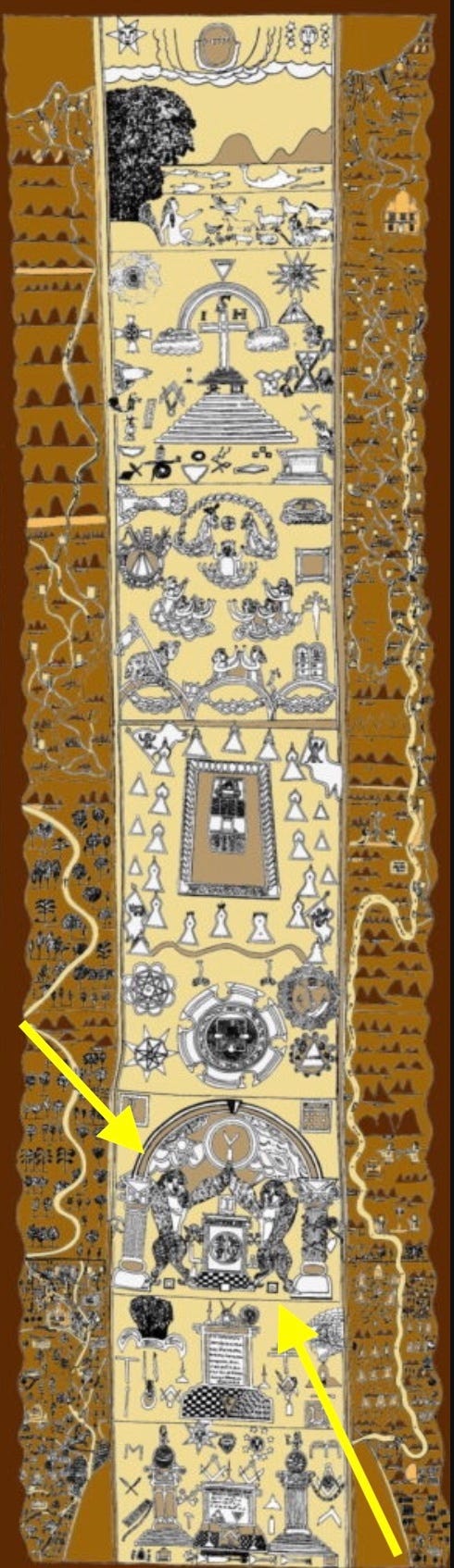
Arrows Point to Modern Grand Lodge Seal
“The relic is a scroll, the now famous Kirkwall scroll: “Radiocarbon dating has revealed the Kirkwall Scroll, a rare wall hanging in the care of a masonic lodge in Orkney, is a medieval treasure worth several million pounds.”
The University of Oxford research laboratory dated the highly symbolic central panel to the 14th or early 15th century. Radiocarbon dating is very accurate for such short time periods of only a few hundred years.
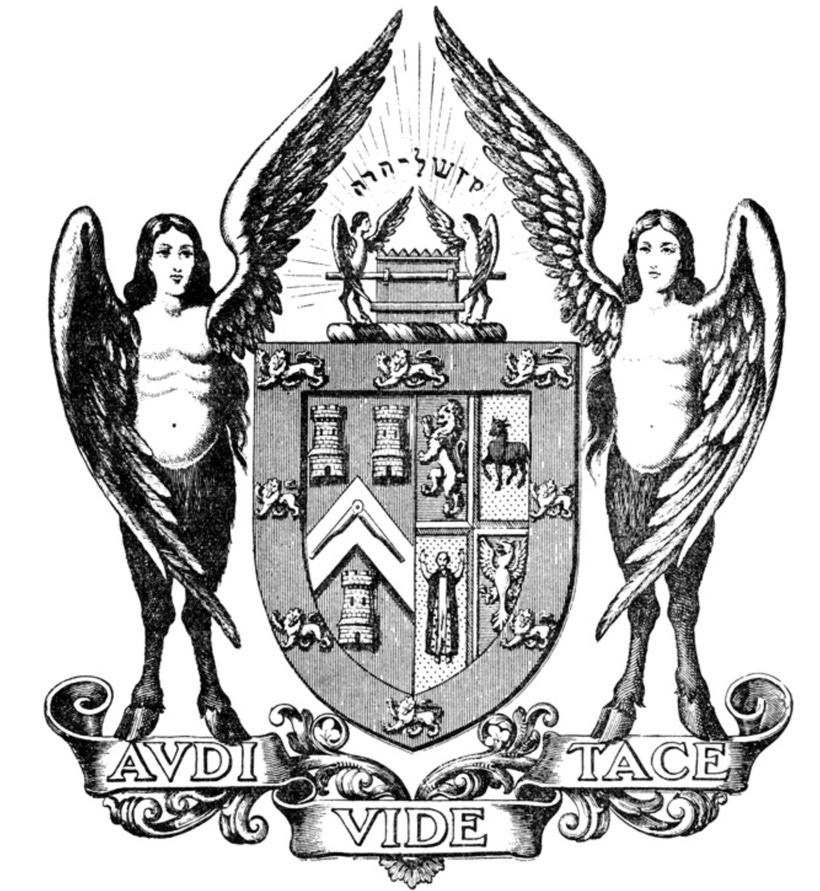
UGLE Grand Lodge Seal
“The St Clair Earls of Orkney were associated with the legendary Knights Templar, and the family stronghold in Midlothian is the site of Roslin Chapel, built by Orkney Earl William St Clair in the fifteenth century.
The Roslyn chapel is well known for its Masonic connections and symbolic carvings.
''The operative side of the craft, connected with the trade guilds and stone masons, was also strongly associated with the St Clairs,'' says Roslin Chapel's exhibition director Bob Brydon, ''so there's little doubt the Kirkwall Scroll has very significant implications.’'17
Symbolism in the scroll’s 14 century central panel is nearly identical with the United Grand Lodge Of England’s Coat of Arms.
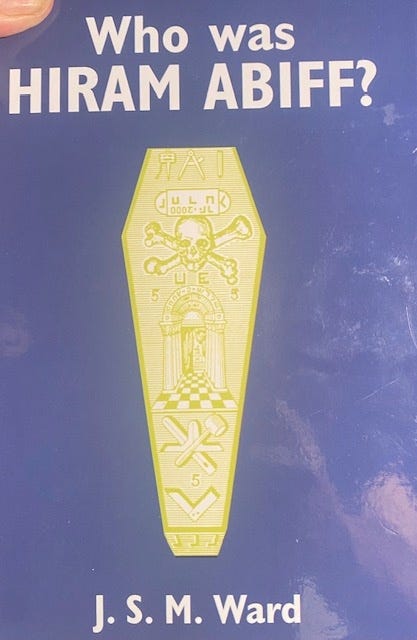
By the way, the Third Degree of The Blue lodge where the legend of Hiram Abiff, the Masonic hero-architect is introduced is a theatrical participatory symbolic representation of human sacrifice, based on ancient dying and rising god mystery religions like Astarte and Tammuz, Isis and Osiris, Venus and Adonis.44
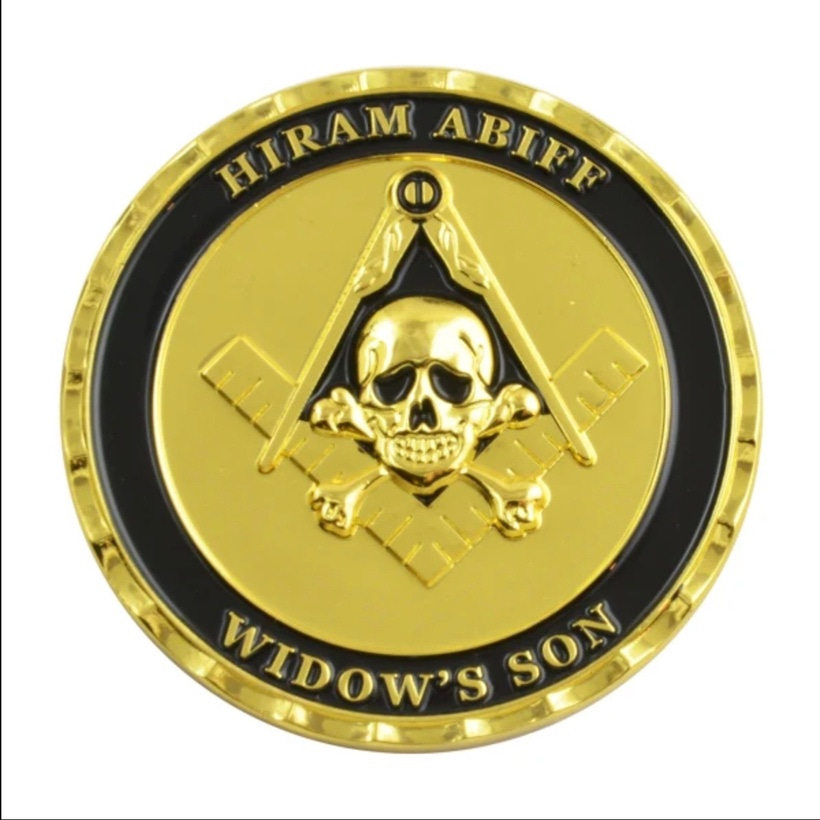
I added that in to fill out what was promised in the title and to create a cliff hanger ending. I will go out on a limb (what, me?) and call the North Berwick Witch trials human sacrifice (Titus Andronicus much?) and the frequent use of the punishment of “drawing and quartering” on the streets of London.
It appears (preliminary theory) that Baron Verulam Francis ShakesBacon pinched the symbolic poetry of Du Bartas, the ideals of religious tolerance and the symbolism of the Family Of Love with the symbolism and Gnostic world view of the Knights Templars for starters. Add a tremendous fealty to King James Solomon Vi and I with a master Mason initiation relating to that of the ancient mystery schools. For proof of this occult ceremony being in Shakespeare there is Colin Still’s remarkable 1923 book Shakespeare’s Mystery Play: A Study Of The Tempest. A good introduction is NORTHROP FRYE AND COLIN STILL by Robert D. Denham. 45
Meanwhile Shakespeare is indisputably saturated with references to and with the symbolism of Freemasonry. More on that in Part 4
It’s all part of the strangest story ever told about the smartest, most influential man who ever lived. ®
This essay ain’t over. Part 3 and Part 4 are to follow.
Please visit thehiddenlifisbest.com and my Patreon page to support this work, which would be so greatly appreciated. I need help. Haha! Or please become a apid subscriber here at Substack.
Freemasonry began in Scotland, and was polished up in London by Francis Bacon. There I said it again. Salud! To your health. Love the world each other yourself and God. Peace, Robert Frederick
DISCLAIMER. These series of essays are in no way meant to disparage or demean, for multiple reasons, individual Freemasons. Four hundred years after it's secret origins Freemasonry has gone through many localized iterations (part of it's strength) and it means many many different things to many different people, and has done some good for people no doubt. The reality is complicated. Freemasonry has also produced sinister incarnations such as Propaganda Due. As was originally designed it was meant to expand global control to a secret Elite and that’s really really really not good.
Footnotes to The Birth of a New Religion: Freemasonry’s Scottish Origins
1. Masonic Lodge Of Education. Oldest Masonic lodge
https://www.masonic-lodge-of-education.com/oldest-masonic-lodge.html
2. The Origins Of Freemasonry: Scotland’s Century 1590-1717. Douglas Stevenson 1988 Cambridge
3. United Grand Lodge Of England UGLE.com
4. Francis Bacon Perez Zagorin 1998 Princeton. Pg 70-75
5. Bacon is Shake-Speare Together with a Reprint of Bacon's Promus of Formularies and Elegancies. Edwin Durning_Lawrence 1910
6. Francis Bacon Society francisbaconsociety.co.uk
7. Shakespeare’s Unorthodox Biography: New Evidence of an Authorship Problem Diana Price 2013
8.Shakespeare Was a Woman and Other Heresies: How Doubting the Bard Became the Biggest Taboo in Literature Elizabeth Winkler Simon & Schuster 2023
9. The Lost King
https://www.thelostking.movie/
10. The Mystery Of Francis Bacon Smedley Butler 1910 pg 106 https://www.gutenberg.org/ebooks/36650
11. Zagorin op cit pg 134
12. Zagorin op cit pg 153-161
13. Astraea: Imperial Theme in the Sixteenth CenturyYFrances A. Yates, Routledge & Kegan Paul, 1975
14. The Invisible College: The Royal Soceriy, Freemasonry and The Birth Of Modern Science. Paul Lomas Headline 2002 pg 73
15. The History of the Royal Society of London for the Improving of Natural Knowledge 1667. THOMAS SPRAT
16. Ashmolean Musem https://ashmole.com/elias-ashmole-history/
17. Invisible op cit
18. The Origins Of Freemasonry: Scotlands Century 1590-1710. David Stevenson, Cambridge University Press 1988 pg 5
19. The Economics of Guilds; Sheilagh Ogilvie, University of Cambridge
20. Origins op cit pg 6
21. Origins op cit pg 6
22. Freemasonry and the Hermetic Arts freemasoninformation.com/masonictraveler/freemasonry-and-hermetica/
23. The Stonemasons and Their World https://www.greatenglishchurches.co.uk/html/the_stonemasons_and_their_world.html
24. Giordano Bruno in England, Revisited Mordechai Feingold
https://www.academia.edu/5495298/Giordano_Bruno_in_England_Revisited A.
25. Giordano Bruno & the Embassy Affair. John Bossy, Yale University Press
26. Stevenson pg 54
27. Sir William Sinclair Of Roslin https://www.geni.com/people/Sir-William-Sinclair-of-Roslin/6000000004533450985
28. Freemasonry Today https://freemasonry.bcy.ca/biography/james_vi/james_vi.html
29. the Invisible College: The Royal Society, Freemasonry and the Birth Of Modern Science. Robert Lomas 2002 pg 69. The entire book is dedicated to Robert Moray.
30. Sir Robert Moray - Soldier, scientist, spy, freemason and founder of The Royal Society
31. Masonry, symbolism and ethics in the life of Sir Robert Moray, FRS David Stevenson
32. The Hiram Key (1996), by Christopher Knight and Robert Lomas. pg 201
33 Knights Templar In Scotland. Wikipedia https://en.wikipedia.org/wiki/Sub_rosa
Francis Bacon book
34. Why Freemasonry Is A Religion https://www.patreon.com/posts/why-freemasonry-105934897
35. Restoring the Temple of Vision, Cabalistic Freemasonry and Stuart Culture (2002) Brill Publishing pg 183
36. Historic UK The North Berwick Witch Trials https://www.historic-uk.com/HistoryUK/HistoryofScotland/North-Berwick-Witch-Trials/
37. Restoring op cit pg 187
38. The Family of Love en.wikipedia.org/wiki/Familia_Caritatis
39. Restoring op cit pg 187
40. Anthony Bacon https://en.wikipedia.org/wiki/Anthony_Bacon_(1558%E2%80%931601)
41. Restoring pg 253.
42. Restoring pg 69
43 Scottish Pork Taboo https://foodanddrink.scotsman.com/food/things-you-might-not-know-the-scottish-pork-taboo/
44. Who Was Hiram Abiff? JSM Ward 1925
45. https://macblog.mcmaster.ca/fryeblog/2013/01/30/frye-and-colin-still/